
It goes without saying that it's a good thing World War III didn't erupt between the United States and the now-defunct Soviet Union. For many of us who were children during the Cold War, the fear of being annihilated in a nuclear conflict was very real. So it's a bit strange now that we can look back at that era and have the luxury of imagining what could have been. Or we can play World in Conflict, Sierra and Massive Entertainment's incredible new real-time strategy game. This isn't your standard RTS game, as World in Conflict doesn't follow the familiar model of resource gathering, base building, and swarming armies. Instead, it feels almost like an action game masquerading as a strategy game, and it offers up a relentlessly fun and amazing new approach to the genre, one that works in single-player and even more so in multiplayer.
World in Conflict is set in an alternate-history version of 1989. Instead of the Berlin Wall falling and communism collapsing, the Soviet Union launches an assault on Western Europe, and the United States rushes its forces in to aid its Western allies. Four months into the conflict, after the US Navy has been attrited down, the USSR launches a surprise invasion in Seattle and pushes inland. In the 14-mission single-player campaign, you play as a company commander who is part of the meager US defense; there is no campaign from the Soviet perspective, though you can play as the Red Army in multiplayer. However, the campaign twists and weaves, letting you experience a sample of the European conflict, battle in remote areas of the Soviet Union, and bring the fight to New York City.
Then there's the game's excellent resource system. You're given a pool of reinforcement points that you can use to purchase units. Naturally, the powerful units cost a lot more than weaker ones, so you've got to choose quantity over quality. But it goes a bit deeper than that, as different classes of units have different abilities. For instance, light helicopters are some of the best scouts in the game, able to locate enemies from a distance, but they're extremely vulnerable. Medium helicopters are able to shoot down other helicopters with their air-to-air missiles, but they don't do a lot of damage to armor. Heavy helicopters can eat tanks for breakfast, but aren't effective against other helicopters. So while your initial inclination might be to load up on heavy choppers and go after enemy armor, a wise player recognizes that there are many roles to play on the battlefield. If your units are destroyed, their cost is slowly refunded back into your reinforcement pool, so you can order up replacements, although veteran units are more effective, giving you an incentive to keep your experienced units alive as long as possible.

Team coordination can be handled through a built-in menu system or, even better, the built-in voice-over-IP chat system that lets you communicate vocally with your teammates. All you need is a microphone. Playing in a relatively uncoordinated manner is still a blast, but if you play on a good team against another coordinated team, the gameplay elevates to a whole new level. Victory can be snatched from the jaws of defeat (or vice versa) in intense matches where both teams are hurling all on the battlefield, from air strikes, artillery, multiple tactical nukes, and more. There's nothing quite more urgent than a team desperately trying to cobble together enough tactical aid points for a last-ditch nuke.
Developer Massive Entertainment has been making real-time strategy games for almost a decade now, but World in Conflict is undoubtedly the studio's masterwork. Everything about this game is top-notch, from the addicting gameplay to the amazing visuals. More importantly, World in Conflict offers up a refreshingly new approach to strategy gaming. So if you're a strategy fan, you should definitely try World in Conflict. And even if you're turned off by standard real-time strategy games, you owe it to yourself to try out what Massive has come up with in this exquisite package.
Source :--- Gamespot !!!!


 1 Apple iPhone 2.0: Expect a spiffier, 3G-capable iPhone in 2008 that will include some basic features like video recording, group SMSing etc. which were missing earlier, and more importantly allow users to install programmes of their choice. All the major desi operators have reportedly initiated talks with Apple to sell the iPhone. Expect it in India halfway through '08!
 3 Polymer Screens: Not much point having fancy phones if you have to strain your eyes to peer at those tiny screens, is there? One ingenious solution is the use of flexible screens that fold in and out of handheld devices. They also solve the biggest problem with newer smartphones - battery life. LCD screens are the biggest battery hogs. Replacing them with polymer based displays reduces power consumption. The leading company in this field, Polymer Vision, began manufacturing 'Readius' - a phone with a 5-inch rollable display - earlier this month and Telecom Italia will be the company's first major client in 2008.
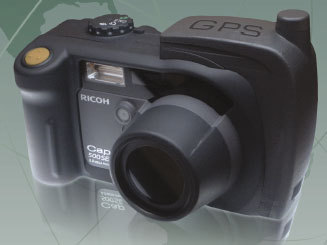 users to pinpoint the location where a photo was taken on a map and add it to the photo information. Millions of users were geotagging photos which got camera makers' antennae up. A number of top manufacturers have announced 2008 rollouts of cameras with built-in GPS so that pictures are automatically geotagged.


